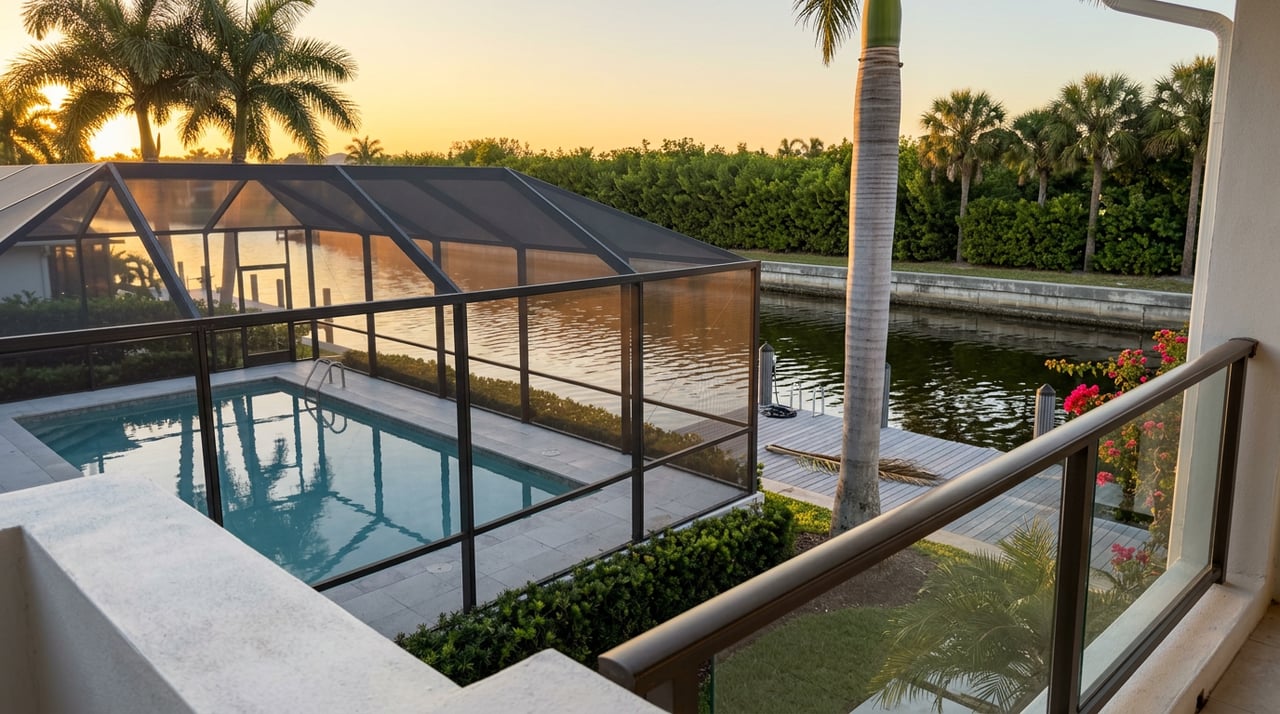
Walk the sand off Broad Avenue South any evening this summer and you will find the same crowd that has always gathered there: a few dog walkers, a couple with a cooler, someone standing still with a phone raised toward the horizon. The pier itself is gone, cordoned off behind construction fencing since Hurricane Ian tore through it in September 2022. But the beach underneath where it used to stand never closed. The city built pedestrian bypasses at the Broad Avenue South and 13th Avenue South beach ends specifically so that walk could continue, and residents have kept using them without much fanfare.
That is the part outsiders get wrong when they hear the pier is closed. They assume the whole ritual packed up and moved a mile north to the next beach with a parking lot. Some of it did. But the story of where Naples watches the sun go down this year is not one relocation, it is three, and each one answers a slightly different question about what a person actually goes to the water for.
The pier itself sustained catastrophic damage in Ian. Roughly 460 feet of the structure was compromised, including a full 140-foot section at the end that dropped into the Gulf along with more than 30 pilings. City engineers eventually determined the entire structure needed to be replaced rather than patched, which is why this rebuild has taken years of planning, permitting, and funding before a single new piling went in the ground.
Construction is now visibly underway. Here's where it stood as of this summer:
What hasn't closed is the beach itself, the western third of the pier parking lot, and the sunset. The city kept both bypass access points open specifically so the loss of the structure would not become a loss of the shoreline.
Here is where the assumption breaks down. If the pier were simply "closed," you would expect everyone to consolidate at whichever alternate beach has the best amenities. Instead, the routine has split along lines that track what people were actually getting from the pier in the first place, not just proximity.
Families who used the pier as a full evening destination, the kind of trip with a cooler, kids who need a bathroom, and a reason to stay past dark, have shifted north to Lowdermilk Park. It has the infrastructure the pier used to provide: a concession stand, two playgrounds, volleyball courts, gazebos, and enough parking that a Tuesday evening doesn't feel like a scramble, even if a Saturday golden hour still does.
People who went to the pier for quiet, not crowds, have moved somewhere the pier never really competed with anyway. Clam Pass Park requires a walk or tram ride through mangroves to reach the beach, which filters out anyone in a hurry. It has become the answer for a slower, more private version of the same ritual.
And then there's the third group, the one easy to miss if you're not local: people who never left. They still park where they can, walk out to the bypass point closest to the old pier footprint, and watch the same horizon they always have. They lost the elevated deck. They did not lose the view.
| Where | What it's actually for | The tradeoff |
|---|---|---|
| Lowdermilk Park | Full evening out, kids, amenities | Parking fills fast at golden hour |
| Clam Pass Park | Quiet, slower pace, fewer people | Requires the mangrove walk or tram first |
| Bypass access near the pier site | The original view, no structure needed | No pier deck, no restrooms nearby |
None of these fully replaces the pier. That's sort of the point. Naples didn't find a substitute. It split one habit into three, based on what each version of the ritual actually required.
The pier gave Naples a stage. Losing it didn't cancel the show, it just moved the audience to three different seats.
The rebuild has been a genuinely large undertaking, not a simple repair, and the funding structure reflects that. The total project cost sits at $26.3 million, built from a patchwork that includes an $11.4 million FEMA grant, additional state grants, $11 million in city bonds, $2 million in county tourist development tax revenue, the city's own beach fund, and public donations, including a contribution from the Collier Community Foundation. Shoreline Foundation Inc., a Broward County contractor, holds the construction contract at roughly $23.45 million, while MHK Architecture designed the new structure with engineering support from Turrell, Hall & Associates.
Groundbreaking happened in early January 2026, and as of an early August 2026 update, the project remains on a 14 to 18 month construction window, which still points to a completion around July 2027. That target has moved before. An earlier version of the project timeline, from before construction actually began, had estimated a November 2026 finish. The gap between those two dates is a useful reminder for anyone tracking the project closely: a construction timeline only firms up once concrete is actually being poured, and Naples didn't reach that stage until the summer of 2026.
The rebuilt pier will look similar to the one everyone remembers, with a few real upgrades. The new pilings will be 18 inches in diameter instead of 14, and the whole structure will sit at least three feet higher to better handle storm surge. It will also include an underwater wildlife camera and a dedicated beach patrol office. One thing it won't have is a permanent restaurant. FEMA ruled the old concession space ineligible for replacement, so the plan now calls for a portable food cart instead.
If your version of the sunset routine has shifted to Lowdermilk, you're already close to two of Naples' better dinner options. Fifth Avenue South and Third Street South both sit a short drive or an easy bike ride away, and pairing either one with a sunset walk has become a natural substitute for the old pattern of ending an evening at the pier itself. Third Street South tends to be the quieter of the two if the crowds at Lowdermilk already feel like enough people for one evening.
The pier will come back. When it does, it will be a few feet higher, a little sturdier, and probably busy again within a month. Until then, the interesting thing isn't that Naples found a replacement. It's that the city didn't need one single replacement at all. The sand, the horizon, and the habit of stopping to watch it were never actually part of what closed.
If you're already living this routine, you don't need a real estate agent to tell you where to watch the sunset tonight. But if a friend, a parent, or a future neighbor ever asks you what it's actually like to live near this stretch of coast day to day, this is the kind of detail that answers the question better than a listing photo ever could. That's the same local read David Burnham brings to every conversation about Naples, whether the question is about sunset or about square footage. Start Your Southwest Florida Home Journey — Contact David Today.
Address
800 Laurel Oak Dr., #400
Naples, FL 34108